A personal perspective on the standards that protect our industry. By DeAnna Martin, ANSI Secretariat for ASC A92
When I first began working with the A92 Committee in 2012, I quickly realized that standards are far more than technical documents. They are evolving safeguards shaped by the collective knowledge, experience, and commitment of an entire industry. Every revision, discussion, and vote ultimately serves one goal: helping ensure that workers return home safely at the end of the day. Over the years, serving as a liaison across both the A92 and A11 committees has given me a unique perspective on how these connect and why that
connection matters.
As equipment becomes more advanced, integrating new technologies, enhanced controls, and increasingly sophisticated safety features, our standards must evolve alongside it. This is not optional. It is essential. The pace of innovation in mobile elevating work platforms and related equipment demands that we continually reassess risk, refine best practices, and provide clear guidance across the industry.
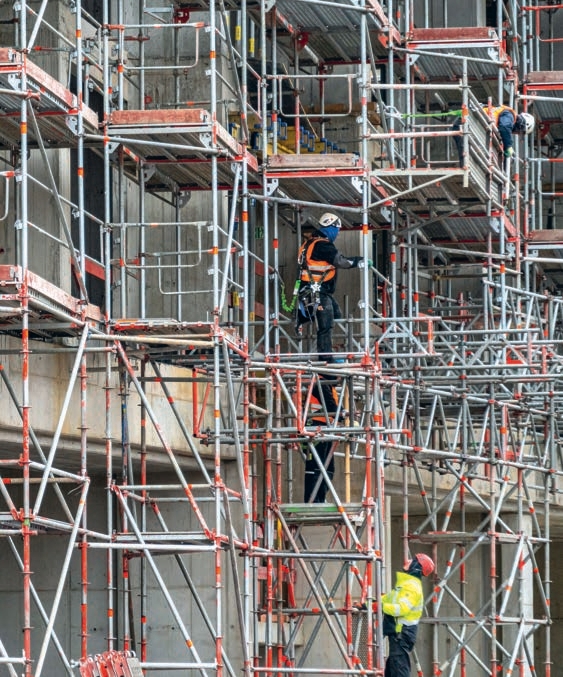
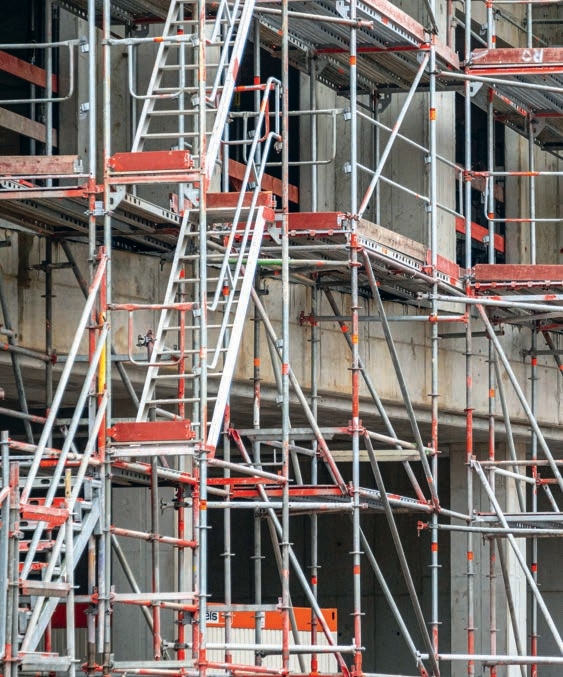
The A92 standards cover mobile elevating work platforms (MEWPs), as well as transport platforms, mast-climbing work platforms, and vehicle-mounted rotating and elevating work platforms. They address everything from design and manufacturing requirements to safe use, training, and maintenance. Similarly, the A11 standards focus on performance, testing, and rating criteria for scaffolding, shoring, and forming systems and their components. Together, they form a framework that not only responds to today’s challenges but anticipates tomorrow’s.
What makes this system remarkable, however, is not just the content of the standards. It is the people behind them.
The ASC A11 and A92 Main Committees are composed of member companies and organizations selected for their technical expertise, safety knowledge, and industry experience. These groups meet regularly to review issues, establish policies, and guide subcommittees focused on specific technical areas. The expectation is simple: bring your knowledge and be willing to contribute your time and expertise.
And that contribution is entirely voluntary. That reality often goes unrecognized. The standards that shape our industry and help prevent injuries and save lives are built by individuals who choose to give their time. Engineers, safety professionals, manufacturers, rental companies, and regulators come together not because they have to, but because they believe in the mission.
For more than 40 years, the Scaffold & Access Industry Association (SAIA) has supported this mission by developing standards for the scaffold and access industry. As Secretariat for the A92 and A11 series, SAIA ensures the development process adheres to ANSI Essential Requirements, the rules that guarantee openness, balance, and consensus. This structure gives our standards their credibility and strength.
Today, that commitment to safety is expanding even further.
To reinforce the intent of the newly developed A11 standards, the SAIA SSFI Committee is developing a product verification program. This initiative will provide a pathway for independent review of product testing, helping ensure that equipment entering the market meets established expectations. It is an important step forward. It bridges the gap between written requirements and real-world implementation.
We expect this service to launch before the end of the year, and it will play a meaningful role in strengthening confidence across the industry, from manufacturers to end users.
But none of this progress happens in isolation. Standards development is, at its core, a collaborative effort. It depends on fresh perspectives, diverse expertise, and a shared commitment to the work. As the industry continues to evolve, the need for engaged volunteers becomes even more critical.
If you have ever benefited from a safer machine, clearer guidance, or improved training practices, you have experienced the impact of standards. Now is an excellent time to be part of that impact.
Getting involved in the ANSI process does not require perfection. It requires participation. Curiosity, a willingness to listen, and a commitment to contribute thoughtfully are what matter most. Whether you are early in your career or bring decades of experience, your voice has value.
From my perspective, serving in this role has been both a responsibility and a privilege. I have seen first-hand how committed individuals come together to solve complex problems and improve safety. I have also seen how those efforts ripple outward into job sites, daily operations, and ultimately, people’s lives.
Standards may be written on paper, but their impact is felt in the real world. And that impact starts with people willing to step forward. If you are ready to contribute, we welcome you.