AI, drones, digital twins, safety wearables, and connected equipment are changing how US construction work is planned, recorded, and checked. For scaffold and access contractors, the first effects are likely to be felt in documentation, safety records, and proof of work
Technology is becoming part of everyday site management in US construction, but the reason is practical. Contractors are adopting new systems because jobs are harder to plan, records are harder to manage, and clients want clearer proof of what happened on site.
US construction is also moving through a more uneven market. After several years of strong demand in some sectors, FMI expects total US construction put in place to rise by just 1% in 2026, following a 1% decline in 2025. Data centers and infrastructure continue to support the market, while multi-family, lodging, commercial, traditional office, and some manufacturing work remain under pressure.
For scaffold and access firms, the clearest change may come through the project record. The jobsite is now easier to photograph, scan, model, and track. TECH & INNOVATION SCAFFOLDMAG.COM 21 22 SCAFFOLD&ACCESS MAGAZINE TECH & INNOVATION A supervisor’s phone, a drone flight, a 360-degree camera walk, or a laser scan can all become part of the file that proves what was built, when it was built, and what changed along the way.
That is especially relevant to access work because scaffolds rarely stay still. A structure may be built for one phase, adapted for another, partly dismantled, reloaded, handed over to another trade, and then inspected again. On a busy project, the scaffold is part of a moving system of work, and the record around it has to keep up
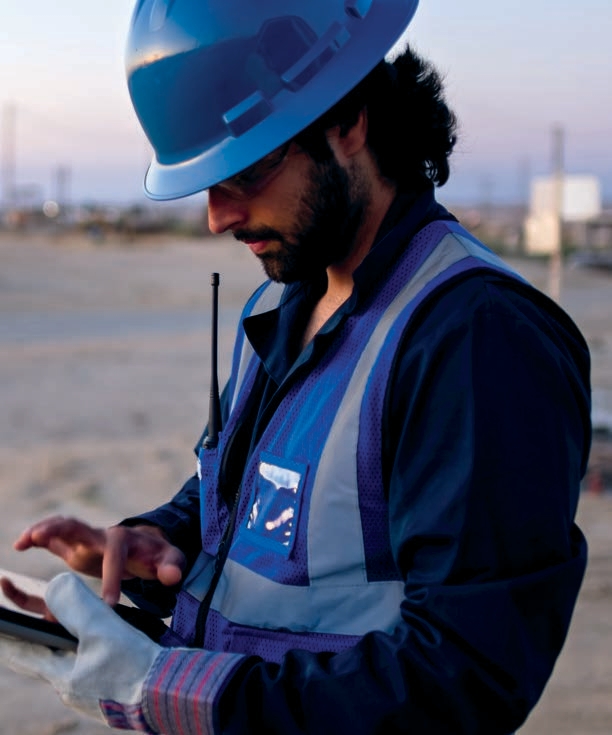
WHY CONTRACTORS ARE LOOKING HARDER AT TECHNOLOGY
Much of the technology conversation in construction comes back to one old problem: lost time. Procore’s Future State of Construction report found that 18% of project time is lost searching for data, while 28% is wasted because of rework. For contractors working on tight schedules, those numbers are not abstract. They describe time spent looking for the latest drawing, checking what was agreed, chasing inspection records, or proving why a delay occurred.
Owners and general contractors are paying closer attention to site information because poor records cost money. They want to know what has been completed, what has changed, what has been inspected, and where the next problem is likely to appear. That creates more pressure on subcontractors to supply clear, usable information rather than rely on paper files, scattered photos, and verbal updates.
For years, construction software mostly sat in the office. Estimating, scheduling, accounting, and document control were natural places to start because the information was already structured. The field has been harder to digitize because jobsites are wet, noisy, crowded, and full of exceptions that software rarely handles neatly.
That is starting to shift because the tools are easier to use on site. Phones, tablets, drones, scanners, and connected equipment have made field capture more normal. Cloud platforms have made the information easier to share, while AI is now being added to search, summarize and compare those records.
For access contractors, this changes the weight carried by the project file. The scaffold is still judged through inspection, competence, and safe use, but it is also becoming part of a wider record that may be reviewed by clients, safety teams, insurers, designers, and legal teams long after the work has
moved on.
AI NEEDS BETTER RECORDS BEFORE IT CAN DO USEFUL WORK
Artificial intelligence is getting most of the attention, but construction is still early in its use of
AI. Dodge Construction Network, working with CMiC, reported that 87% of contractors expect AI to have a major effect on construction, while only 19% have changed their workflows to use it.
That gap reflects a common problem: many contractors are interested in AI before they have fixed the information behind it. Project data is often spread across emails, PDFs, inspection forms, photo logs, folders, and different software platforms. If the information is out of date, poorly labelled, or hard to find, AI will struggle to produce anything useful.
The first useful applications are likely to be fairly ordinary. AI can help search specifications, summarize meeting notes, compare documents, prepare draft reports, flag schedule risks, and pull information from drawings or project records. That may sound modest compared with the sales pitch around AI, but it addresses a real problem on live jobs.
For scaffold and access contractors, the early uses are likely to sit around paperwork and compliance. AI may help draft daily reports, search scaffold inspection records, organize handover packs, check method statements, or pull relevant details from project documents. The time saving could be useful, especially for supervisors who already spend too much of the day dealing with admin after the physical work has been done.
The human check remains essential. A software tool can help find information, but it cannot take responsibility for scaffold design, tie arrangements, loading decisions, rescue planning, or safe systems of work. In access work, the consequences of a wrong assumption are too serious for any contractor to rely blindly on generated output.
The useful starting point is record quality. If inspection notes are inconsistent, photo files are unlabeled, and project folders are a mess, AI will only expose the weakness faster.
REALITY CAPTURE MAY ARRIVE FIRST
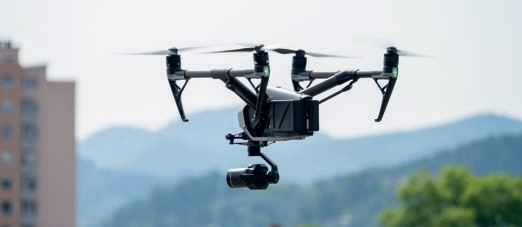
For many scaffold and access firms, reality capture may have a more immediate effect than AI. Drones,
360-degree cameras, phone-based capture tools, and laser scans are already being used to document construction sites. They show what was in place, when it was in place and how conditions changed.
That is valuable for temporary access because a written record can miss the context. A form can say a loading bay was installed, while a 360-degree capture can show where it sat, what was around it, and whether other trades had access. A drone image can show roof conditions before a scaffold design is finalized, and a laser scan can confirm dimensions on an awkward facade before materials are sent to site.
The value starts before the job is won. During tendering and planning, reality capture can help contractors understand rooflines, setbacks, plant areas, courtyards, service yards, and public interfaces without relying only on old drawings or a short site walk. That can improve design assumptions, reduce wasted visits, and give engineers better information earlier.
During the work, the same tools can track progress, adaptations, protection measures, loading bays, and handovers. Afterward, they can help answer more difficult questions: who changed what, when access was available, what condition the area was in, and what the scaffold had to be built around.
There is a commercial edge here that contractors should not ignore. If a general contractor expects weekly 360-degree walks, drone records, digital inspections, and platform uploads, that work has to be included in the price. A supervisor cannot absorb endless digital admin on top of managing crews, materials, inspections, adaptations, and client requests.
The risk is scope creep. A contractor may price a traditional access package, then find the client expects a digital reporting service as part of the job. That discussion needs to happen before the contract is signed.
DATA CENTERS ARE RAISING THE STANDARD
The data center market shows why this shift matters commercially. AI is driving demand for digital infrastructure, but the construction work is physical: power, cooling, fiber, substations, backup systems, steelwork, facades, roof plant, and heavy services. Deloitte estimates that US data center power demand could grow from 33 gigawatts in 2024 to 176 gigawatts by 2035, with AI data centers accounting for most of that increase.
CBRE reported that vacancy across primary North American data center markets fell to a record low of 1.4% at the end of 2025, while primary market supply rose 36% year-on-year to 9,432 megawatts. The demand is strong, but these projects are also facing constraints around power, permitting, zoning, and delivery.
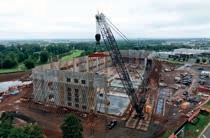
For scaffold and access contractors, data centers are one of the clearest links between technology trends and future workload. These projects are fast, technical, and services-heavy. They often involve dense mechanical and electrical packages, strict safety controls, and heavy coordination between trades.
Access can be needed across steelwork, facades, roof areas, plant zones, internal services, and commissioning works. The physical access challenge is matched by a documentation challenge, because clients on these projects tend to expect clean records, fast answers, and fewer surprises. Contractors may be required to work inside common project platforms, use digital permits, provide online inspection records, coordinate through BIM, and respond to visual progress tracking.
That creates an opening for access firms that can plan early and document clearly. A contractor that understands the client’s digital systems gives the project team less to chase and fewer gaps to manage. A contractor that treats reporting as an afterthought may still build a sound scaffold, but it risks falling short of how the project is being managed.
SAFETY TECH HAS TO EARN TRUST
Safety technology is moving into the same jobsite record. Cameras, wearables, geofencing, proximity
alerts, digital inspections, and AI-supported safety tools are all being tested as ways to spot hazards
earlier and respond faster. The National Safety Council’s Work to Zero research has also found that 83% of employees were open to trying new safety technologies.
For scaffold and access work, the appeal is clear. Cameras can help monitor restricted zones. Wearables can track fatigue, exposure, or movement. Geofencing can warn when people or equipment enter a hazard area. Digital inspection tools can make records easier to complete, review, and share.
The challenge is trust. Workers need to know what is being tracked and why. Supervisors need alerts that mean something. Managers need systems that help field teams make decisions rather than give them another dashboard to maintain.
A wearable that feels like surveillance will face resistance. A camera system that creates constant alerts will soon be ignored. A dashboard that looks useful in a meeting may have little value if it does not change what happens on site.
For access contractors, the test should stay practical. The tool needs to help prevent a fall, a dropped object, an unauthorized alteration, a missed inspection, or a poor decision made under pressure. If the benefit cannot be explained clearly to the people using it, the technology is unlikely to last.
TEMPORARY WORKS NEED TO BE IN THE MODEL EARLIER
BIM and digital twins are often discussed in broad terms, but the access issue is specific. Scaffolding
and temporary works need to be considered earlier in the project, before the main design, logistics plan, and construction sequence have already locked in avoidable problems.
Late access planning can leave contractors dealing with poor tie locations, blocked elevations, awkward loading routes, public interface issues, and clashes with other trades. Digital planning can bring those problems to the surface before crews and materials arrive.
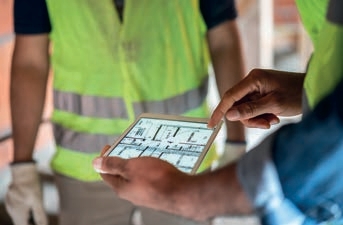
A scaffold model can show where ties may be needed, how a loading bay will work, where public protection sits, and how access changes during the program. It can also help the project team understand how one access decision affects facade works, roofing, MEP installation, lifting plans, or public protection.
That gives scaffold and access firms a stronger voice earlier in the job. On complex facades, industrial sites, infrastructure work, and major commercial projects, small access decisions can affect several trades. A contractor that can show those issues clearly in the model can become part of the planning conversation rather than only being called in to solve problems later.
CONNECTED EQUIPMENT WILL CHANGE SITE MOVEMENT
Connected equipment and robotics may feel further away from scaffold and access, but they will affect
how sites are organized. Remote-operated machines, semi-autonomous equipment, and connected fleets are becoming more common, while robotics is finding work in defined tasks such as layout, scanning, inspection, drilling, and material movement.
The first effect on scaffolders may come through coordination rather than replacement. As plant and equipment become more closely tracked, movement routes, exclusion zones, and lifting areas are likely to be planned and monitored with more detail. Access contractors will need to understand how scaffold deliveries, loading bays, hoists, MEWPs, and temporary structures fit into that controlled site environment.
This again comes back to information. More site activity is being recorded, measured, and managed digitally, even when the work itself is still done by skilled crews. Access work will be part of that picture, whether the contractor owns the system or works inside someone else’s.
What Access Contractors Should Do Next
The technology market will keep producing new tools, and contractors do not need to chase all of them. The better starting point is the work that already causes pain: missing photos, unclear handovers, inconsistent inspection records, latedesign information, disputes over changes, and supervisors losing time to admin.
From there, the question becomes more practical. Where can a digital tool remove a repeated problem or create a stronger record? Better folder discipline, consistent photo logs, digital handover packs, searchable inspection records, and basic training on site-capture tools can all improve how a contractor protects its work.
Contractors should also ask sharper questions before pricing work. What project platforms will they be expected to use? Are digital inspection records required? Are daily or weekly photo records expected? Who owns site photos, scans, and field data? Will workers be tracked or monitored? Does temporary access need to be coordinated in BIM? Who checks AI-generated reports? Is digital reporting included in the contract price?
These are commercial questions as much as technology questions. If clients expect more documentation, more uploads, and more digital coordination, that time needs to be recognized in the scope.
The jobsite is becoming more digital because construction needs better control over time, cost, safety, and evidence. Scaffold and access contractors are too visible, too exposed, and too closely tied to other trades to sit outside that change. The firms that handle it best will be the ones that use better information to plan their work, prove what they did, and protect their position when projects become difficult.